
What is Soap?
Are You Using Soap... or Detergent?
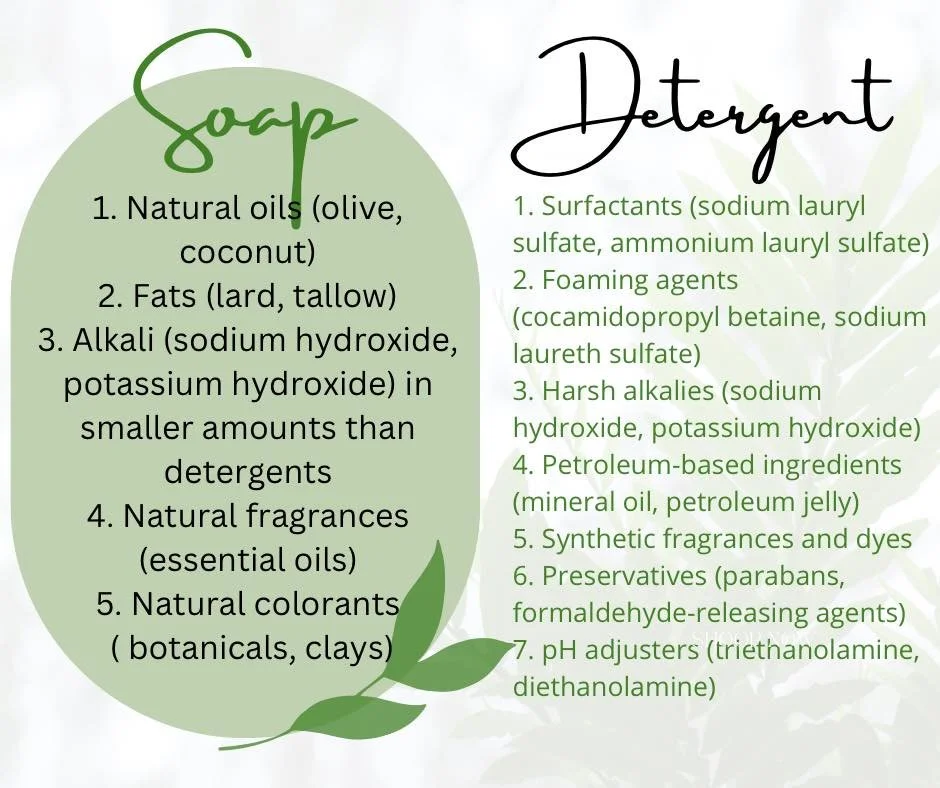
I spent years unknowingly using DETERGENT on my skin instead of SOAP?! When I realized this I had flashbacks to my childhood when my skin would be inflamed and itchy to the point that I cried after bathing. I won’t name the popular brand name - but I now know that I was using a bar of detergent instead of using soap.
Most commercial "soap" on the grocery store shelves is actually labeled as a "beauty bar" or "cleansing bar." That’s because, by legal definition, they aren't soap at all—they are harsh, synthetic detergents. These products (and most mainstream body washes) rely on lab-made surfactants and artificial fragrances that can be incredibly aggressive, especially on sensitive skin.
Do you keep lotion everywhere?
Have you ever noticed that the more you wash, the more lotion you need? That’s the detergent at work. Once you quit using synthetic detergents and switch to real soap, you will likely notice your need for lotions and balms lessons. When your skin stops being stripped of its natural oils by harsh chemicals, it can find its own healthy balance again.
At From Seed to Soap, we believe in the real deal: true soap made with the good stuff—natural ingredients that make your skin feel nourished, not stripped. All recipes and tutorials are based on cold process soapmaking no detergent bars here. Do you want to recreate detergent bars at home? These are sometimes referred to as syndet bars (synthetic detergent bars), and while you can find recipes for them online, they involve handling complex chemical surfactants that just don't align with our "Seed to Soap" philosophy.
If you want to learn how to make authentic, skin-loving soap from scratch, you are in the right place!
The Chemistry of Soap
At its simplest level, the birth of a bar follows a precise equation: Fat (Acid) + Lye (Alkali) = Soap + Glycerin
When oils like tallow meet lye, they undergo a complete transformation into fatty acid salts. These salts—such as sodium oleate and sodium stearate—are what we know as soap. These compounds give soap its cleansing ability by allowing oil and water to mix, so dirt and oils can be lifted from the skin and rinsed away.
No Lye Remains: A common misconception is that lye stays in the soap. However, when formulated correctly, the lye is completely consumed in the reaction. There is zero lye left in your finished bar.
Natural Glycerin: Unlike commercial “soap” or detergents that strip it away, our process creates and keeps glycerin—a natural moisture-magnet that keeps your skin hydrated and soft.
Formulating the Perfect Natural Soap
In natural soapmaking, we don’t need to "fix" a harsh detergent with additional chemicals. Instead, we rely on saponification—a traditional process that naturally transforms whole fats into skin-loving soap salts and moisture-rich glycerin.
True soap is an architectural feat of chemistry. We craft our recipes using a diverse selection of oils, fats and butters- each chosen for its specific contribution: lather, creaminess, hardness, cleansing, and conditioning. A well-balanced formula is a harmony of these elements. By carefully pairing high-cleansing oils with deeply conditioning fats and butters, we ensure that their cleaning power isn’t too harsh. Finding the perfect balance is the key to a soap you love to use, and that makes your skin feel conditioned and clean.
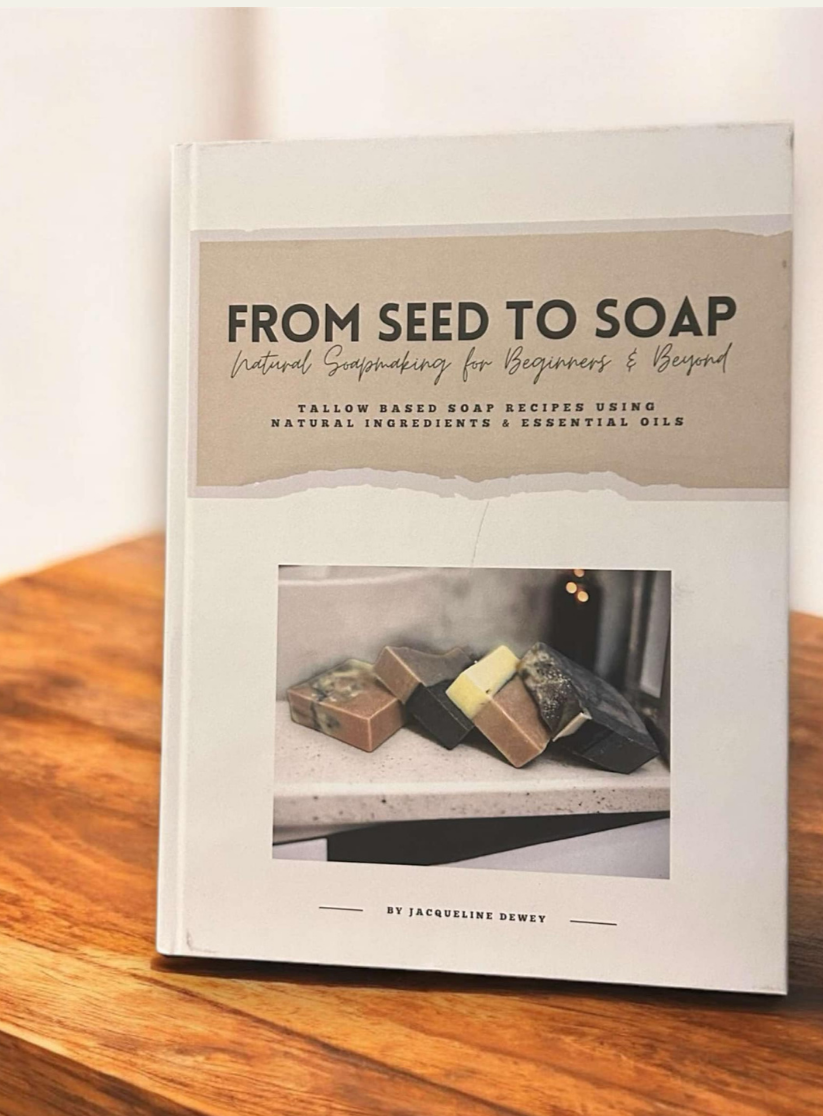
This balance is the secret to a bar that cleanses thoroughly without stripping your skin's natural integrity. It takes immense time to formulate, test, and repeat to find that perfect balance. That is why the best soap formulas are often closely guarded secrets; they represent a maker’s greatest work. All 14 of my very best formulations are found in my book From Seed to Soap.
Once the foundation of the bar is balanced, we look to nature for performance. Rather than using synthetic surfactants like SLS, we boost lather and bubbles with simple kitchen staples like raw honey, sugar, milk, or plant purees. These natural sugars increase the soap's solubility in water, creating a rich, decadent foam that feels as good as it looks.
How soap ‘feels’, its texture is also important. To achieve a superior texture, we refine our formulations based on the physical properties of our oils and can further enhance the texture by incorporating natural earth clays.
When you calculate a recipe, you use a specific amount of sodium hydroxide (NaOH) to transform fats into a solid soap. By intentionally "discounting" the lye—usually by 5% to 10%—you create a safety buffer. This is often called a ‘superfat’, but the true term is lye discount. My favorite soap calculator is found here.
Why We “Superfat”
Skin Conditioning: Those leftover oils (like Shea Butter or Avocado Oil) stay suspended in the bar, acting as an emollient that mimics the skin's natural lipid barrier.
Safety Buffer: It accounts for slight variations in the purity of your lye or the precision of your scale, ensuring the final bar isn't "lye heavy".
The "Nourished" Feel: It’s the primary reason your handmade bars feel creamy and luxurious compared to the "stripped" feeling of detergent bars.
Ingredients I use
Whole Ingredients: I use real, raw ingredients—no artificial substitutes or lab-made foam boosters.
Botanical Colors: Natural colors derived only from plants or clays.
Aromatherapy: 100% pure, steam-distilled essential oils to provide a great scent.
No Red Flags: No GMOs, harmful seed oils, palm oil, parabens, sulfates, or silicones.
Ready to Start Your Soapmaking Journey?
Making the switch to true soap is even more rewarding when you craft it yourself. To help you get started without the guesswork, I’ve curated a list of the high-quality, whole ingredients I use in my own kitchen and studio. Grab it here. And lots of other soapmaking freebies are in the store!
Want to learn to make soap?
Get an inscribed copy of From Seed to Soap and lots of freebie downloads here,
Want a softcover or hardcover quick? Find it on Amazon.
Want a digital download of the book? Check out my digital bookstore.
Disclaimer: This guide is for educational purposes only. These statements have not been evaluated by the FDA and are not intended to diagnose, treat, cure, or prevent any disease. Always consult a healthcare professional for medical concerns and perform a patch test before trying new products.
Affiliate Disclosure: This post may contain affiliate links. As an Amazon Associate, I earn from qualifying purchases at no additional cost to you. I only recommend products I truly trust and use in my own home.
