
Why I Choose Natural Soapmaking
Let’s pause for a moment. What does "natural" actually mean to you? Why is the idea of handcrafted soap so appealing?
In a world of "greenwashed" marketing, the word natural is often misused. It actually has no regulated meaning.
When I use it, I’m referring to ingredients derived directly from the earth—free from synthetic chemicals, artificial preservatives, and lab-made additives. As the family soapmaker, I see myself as the steward of my family’s skin health. I want to create products that reflect my values of sustainability and holistic living.
Personally, I can’t imagine spending the time to handcraft soap only to include the same synthetic ingredients found in store-bought bars. If we aren't choosing better ingredients, it’s much easier to just buy a bar off the shelf!
Did you know most commercial bars are not soap? Learn what soap is here.
Harnessing Nature
Natural soapmaking is as much about what we avoid as what we use.
Want an orange soap with lots of bubbles?
Instead of orange mica and synthetic surfactants, you can use pumpkin puree as a water replacement.
Pumpkin provides:
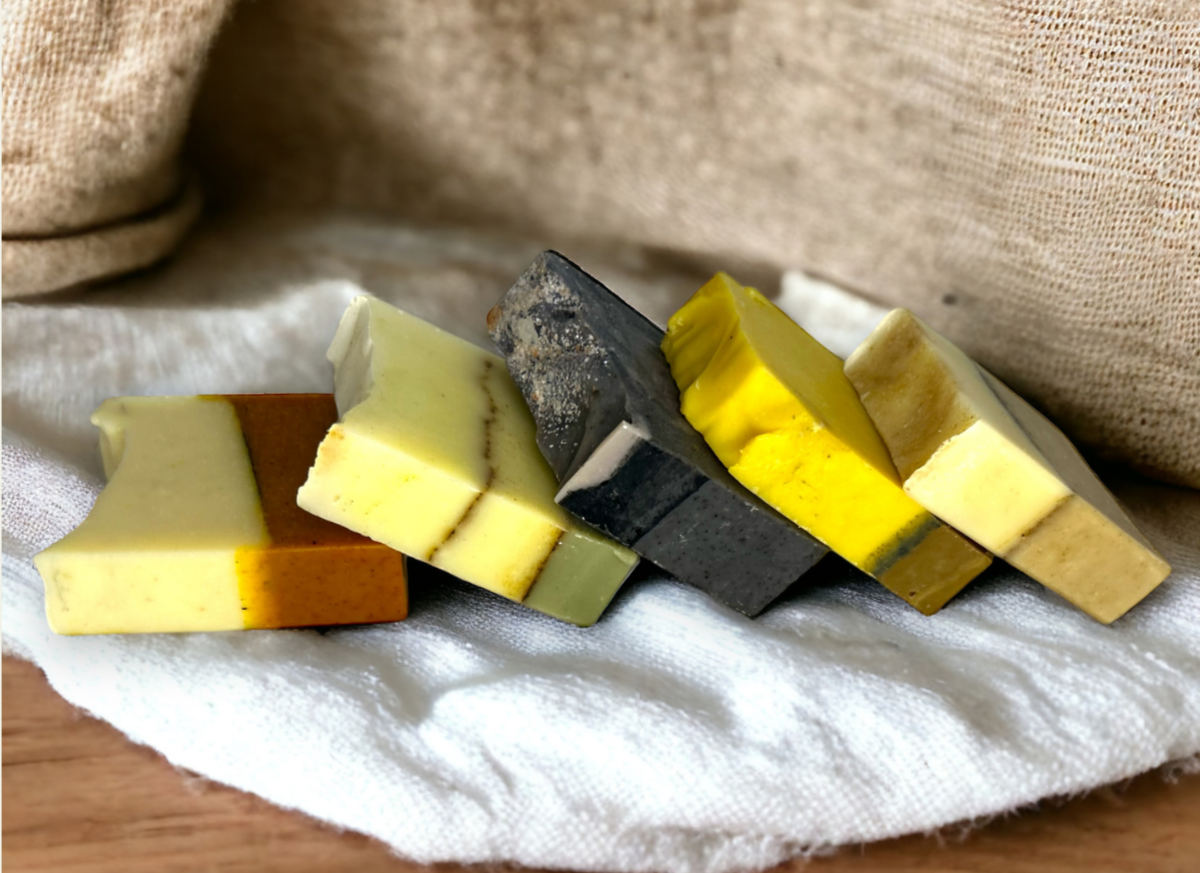
natural orange color (take a look at the orange on the first soap on the left in the above photo!)
natural sugars that boost bubbles and lather
To me, that sounds healthier for the earth, better for my family’s health, and cheaper too — a win-win in my book.
Frustrations
The truth is, I only started formulating my own soap because I was frustrated. I wanted to avoid things like seed oils and synthetics, but every resource I found either relied on them or offered recipes that weren't well-balanced. (I like soap that lasts more than a handful of days!)
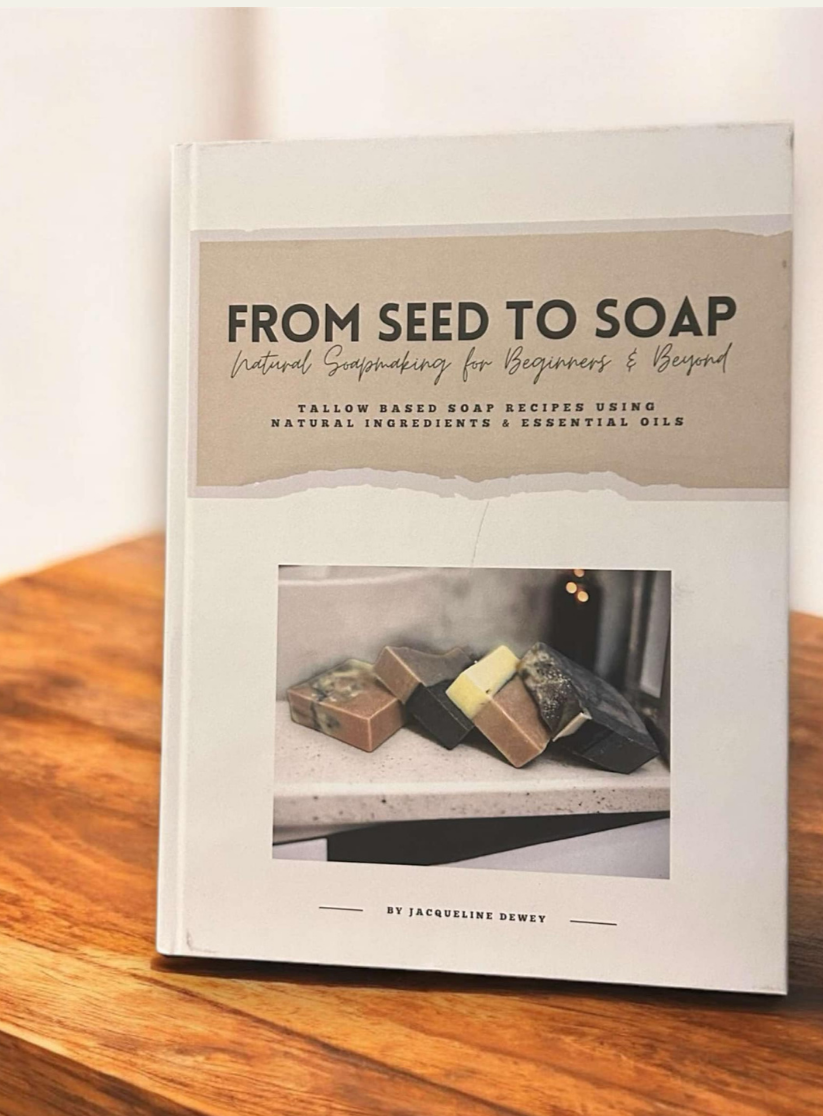
I spent years uncovering the science of soapmaking to formulate a beautiful bar using only simple, natural ingredients. I wrote my book, From Seed to Soap, because I wanted to provide the guide I wish I’d had—a readable roadmap for making skin-loving soap without the ingredients we are trying to leave behind.
What I Leave Out (And Why It Matters)
Many commercial products sold as "soap" are actually synthetic detergents. Not sure what the difference is between soap and detergent? Learn here. They rely on lab-made surfactants and artificial fragrances that can be harsh on sensitive skin. Surprisingly, even many handmade soaps contain these same synthetic additives. By choosing natural oils, traditional animal fats, and steam-distilled essential oils, you will create true soap and cast a vote with your dollar for a cleaner, more intentional way of living.
Here is a quick look at why I choose to exclude certain soapmaking ingredients:
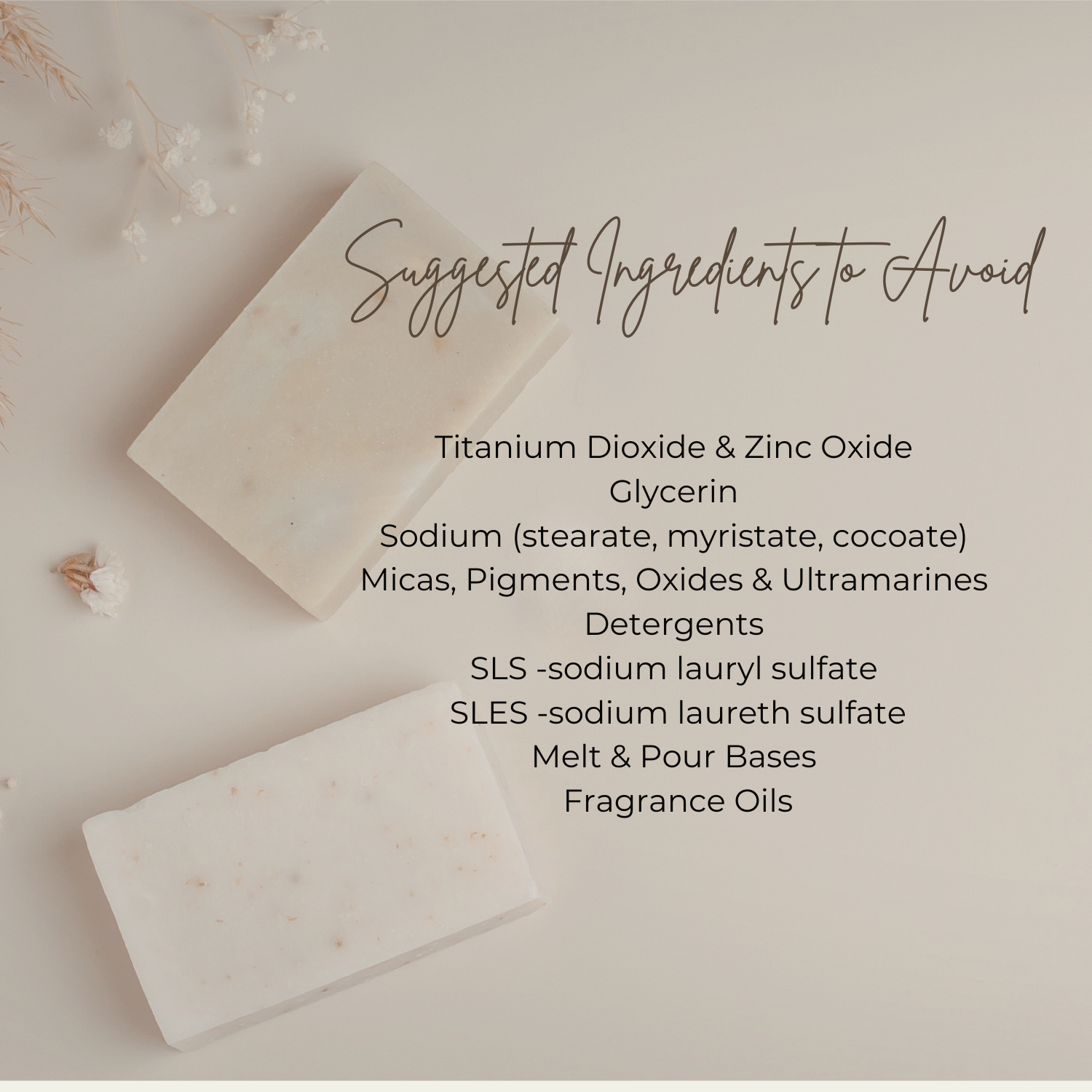
Titanium Dioxide & Zinc Oxide: Regulatory agencies like the EFSA have raised concerns that nanoparticle accumulation may lead to DNA damage or respiratory irritation, prompting bans on Titanium Dioxide as a food additive in the EU. Because these minerals undergo heavy chemical processing and carry inhalation risks during the making process, I prefer to skip them entirely. Most recipes produce a beautiful, creamy white bar anyway, especially when you choose light-colored oils and fats. Study: DNA Damage Study: Ingestion, Inhalation, Skin Contact
Mica: While beautiful, mica mining is often linked to unethical (child) labor practices. FDA-approved colorants added to natural mica can pose health risks, including potential cancer links for some synthetic dyes. While the FDA regulates these substances, safety concerns persist regarding their long-term effects. Mica: Inhalation & Skin ContactStudy: InhalationMica Dust as a Cause of Severe Pneumoconiosis Study: Child Labor Study: Dyes & Contact with Skin Study: Skin is Permeable when Hot
Synthetic Colorants (Oxides & Ultramarines) are common in soapmaking, they raise several environmental and health concerns. Many of these colorants are synthetically produced through complex chemical processes that may leave behind trace heavy metals like lead or cadmium, posing a risk of skin irritation or long-term absorption. The industrial production and mining of these minerals can lead to significant pollution and ecosystem damage. I prefer the earthy tones of natural clays and botanicals. Study: Oxides Ultramarines Safety Data Sheet
Glycerin: There is a profound difference between the glycerin in a bar of cold processed soap and the glycerin in a factory. While glycerin is a natural byproduct of soapmaking, the version found in commercial bases is often a traveler from the petroleum based. This industrial glycerin requires extensive refining to reach cosmetic standards.
Cold-process soapmaking creates glycerin naturally during saponification. No additional refining or industrial processing is required. This "natural" glycerin stays right where it belongs—inside the soap—acting as a powerful humectant that retains skin moisture. It is a world away from the highly processed, "lonely" glycerin used in pre-made bases and commercial body washes.
SLS (Sodium Lauryl Sulfate) for its cousin SLES (Sodium Laureth Sulfate): SynDet bars (synthetic detergent bars) and commercial “soap” (actually detergent) often swap out the harsh SLS for its cousin SLES, claiming it’s a 'gentle' alternative. But there’s a hidden trade-off. To make SLES gentler, it undergoes a process called ethoxylation, which can leave behind trace amounts of 1,4-dioxane—a suspected carcinogen that isn't required to be on the label. This process doesn't make the product safer; it just makes the harshness harder to feel immediately. Since labels do not indicate the presence of these contaminants, labels will list PPG, PEG, and polysorbate in their name and ingredients that end in –eth such as laureth, steareth, ceteareth. Study
Sodium Stearate, Sodium Myristate, and Sodium Cocoate Industrial manufacturing often uses isolated fatty acids—sometimes extracted with solvents like hexane—which lack the natural glycerin buffer found in traditional soap. Because glycerin is highly valuable, it is often siphoned off and sold for use in expensive lotions. This is why commercial bars can feel 'stripping' to your skin.
In natural soapmaking, we don't need these shortcuts. Saponification transforms whole fats into skin-loving soap salts and glycerin naturally, and we leave that glycerin where it belongs—in your bar. By carefully balancing our oils and fats, we produce excellent cleansing power and texture without the chemicals. For an extra lather boost, simple kitchen staples like raw honey or sugar can be added to the batter, while clay provides a silky, luxurious feel. Sodium Stearate Hexane Extraction
Melt & Pour
Melt & Pour is often not considered true soapmaking. Because the base is pre-made, you lose control over the ingredients. You are stuck with whatever oils and preservatives a factory chose to include. Furthermore, because the chemical reaction is already finished, adding fresh ingredients can throw the bar off balance or lead to mold. Most melt & pour formulas contain:
Synthetic Surfactants: Like SLS and SLES.
Synthetic Preservatives: Like parabens or Germall Plus.
Commercial Glycerin: Unlike the natural glycerin created during cold-process soapmaking, commercial glycerin is often a byproduct of biodiesel and requires significant refining.
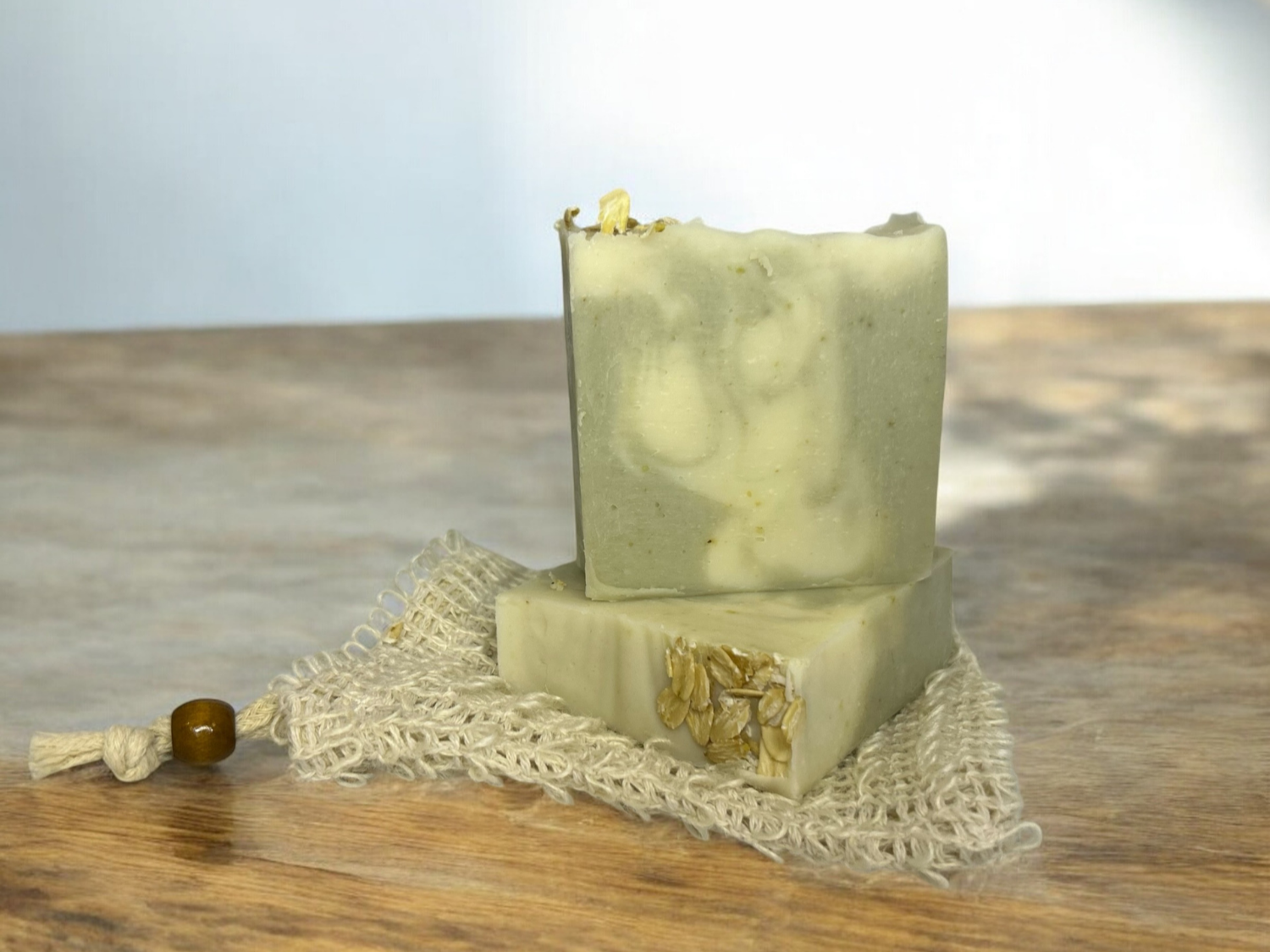
Milk, Honey & Oats + French Green Clay
Synthetic Fragrances
Synthetic fragrances often contain a cocktail of undisclosed ingredients, including phthalates and are petroleum derived. Because these formulas are protected as "trade secrets," we rarely know what we are truly inhaling or absorbing.
Many wellness experts suggest that going "fragrance-free" is a vital step in supporting a healthy endocrine system. Whether you are focused on hormonal balance or general wellness, I have found that the elimination of synthetic fragrances has simplified my life. I highly recommend a "fragrance detox"—reset your environment with pure essential oils or no fragrance at all and notice how much better you feel.
If you're afraid you won't smell good without them, let me reassure you: I use only fragrance-free or lightly scented essential oil soaps and body care, along with unscented detergents, and I am always complimented on how good I smell (yes, even by strangers!).
Seed Oils
There is a lot of debate regarding seed oils. And, not all seed oils are bad. My view is that many are highly processed and carry a heavy industrial footprint that doesn't align with my philosophy.
It is simple to create a balanced bar of soap without relying on heavily processed seed oils. I choose skin-nourishing fats and oils and avoid those that don't align with a natural vision. Whatever your views on seed oils, mine are that they often carry a heavy industrial footprint. I prefer to support ingredients I consider Earth and human-friendly, and due to the nature of how many seed oils are processed, I avoid them.
Let’s Pass on These
Canola Oil: Often derived from GMO crops and chemically processed, it can contain trans fats and high omega-6 levels that I prefer to keep out of my ingredient stash.
Soybean Oil: Like canola, it is frequently genetically modified and heavily processed, carrying similar concerns regarding inflammation.
Rice Bran Oil: While popular for its price point, it has a high omega-6 content, a shorter shelf life, and can contain trace amounts of arsenic due to environmental factors.
Seed Oils We Can Keep
Not all seed oils are created equal due to the nature of their processing. Castor oil specifically is irreplaceable in soapmaking and the amazing bubble and lather it brings to a finished bar of soap. Look for cold-pressed, unrefined options.
Castor Oil: A soapmaking essential! High in ricinoleic acid, it is the secret to a stable, creamy lather and rich bubbles. It’s a powerhouse for skin health and a key ingredient in any gentle, long-lasting bar. It is generally used at a rate of 5-7% as using too much can make soap feel slimy and sticky.
Apricot Kernel Oil: This is incredibly nutrient-dense, packed with Vitamins A and E. It offers a silkiness to the soap that feels luxury-grade without the heavy processing of cheaper alternatives. Apricot kernel oil is also generally used at low rates, such as 5-10% of the total formulation.
Ultimately, the decision to include or exclude certain ingredients is yours. My goal is simply to share the science and the values that guide my own making process—allowing you to decide what feels right for your skin and your family.
A Call to Natural Ingredients
I want to motivate you to look at your ingredients through a different lens. Choosing natural additives isn't just a hobby; it’s a way to embrace simplicity and "slow living" in a world that is often far too fast and complicated. It’s about reclaiming mindfulness and self-reliance while significantly reducing the footprint we leave behind.
Think about the chain reaction of a single conscious choice:
Fewer ingredients to buy → Less industrial processing → A lower carbon footprint → Less plastic packaging
We use soap every single day—it is the one product that touches our skin from head to toe. We have to ask ourselves: What ingredients do we want to regularly expose our bodies to? And just as importantly, as soapmakers, do we want to routinely expose ourselves to these chemicals during the making process? When we choose natural, we aren't just making a product; we are making a statement that our health and our environment are worth these conscious decisions.
The "Wash-Off" Reality: It is important to remember that soap is a wash-off product. Because of the heat and chemical changes during saponification, some therapeutic qualities of oils or other ingredients are chemically altered. For this reason, I often save my most expensive "luxury" oils and ingredients (here’s me looking at you frankincense resin) for leave-on products like balms and salves, while focusing on high-integrity, traditional fats and low cost, natural additives for my soap.
Why I Wrote From Seed to Soap
I wrote my book because the roadmap I needed didn’t exist. I wanted a resource that eliminated seed oils and synthetics while leaning into the timeless science of traditional fats like tallow and lard. I wanted to move away from "guessing" and move toward true formulation.
Inside the book, I’ve included everything you need to make natural, cold-processed soap:
14 Perfectly Balanced Formulas: Tried-and-true bases to get you started.
Over 35 Recipes: Go beyond the basics. We show you how to use dozens of botanicals, clays, water replacements and essential oil blends. From replacing water with goat’s milk or aloe juice to mastering natural colorants, these recipes are your springboard for endless variety.
The Formulation Chapter: A dedicated guide on how to build your own custom recipes from scratch.
Comprehensive Reference Charts: Stop scrolling through endless forums. The Comprehensive Reference Charts provide instant data on dozens of oils, butters, and additives. Know exactly why you’re adding an ingredient and how much to use, every single time.
Want to learn to make soap?
Get an inscribed copy of From Seed to Soap and lots of freebie downloads here,
Want a softcover or hardcover quick? Find it on Amazon.
Want a digital download of the book? Check out my digital bookstore.
What was the "lightbulb moment" that made you want to take control of your family's skincare? Let me know in the comments!
Disclaimer: This guide is for educational purposes only. These statements have not been evaluated by the FDA and are not intended to diagnose, treat, cure, or prevent any disease. Always consult a healthcare professional for medical concerns and perform a patch test before trying new products.
Affiliate Disclosure: This post may contain affiliate links. As an Amazon Associate, I earn from qualifying purchases at no additional cost to you. I only recommend products I truly trust and use in my own home.
